

Your shopping cart is empty!
Purple Chionantha Primrose
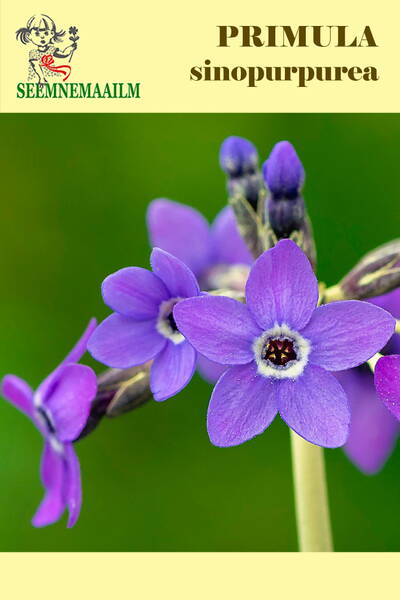
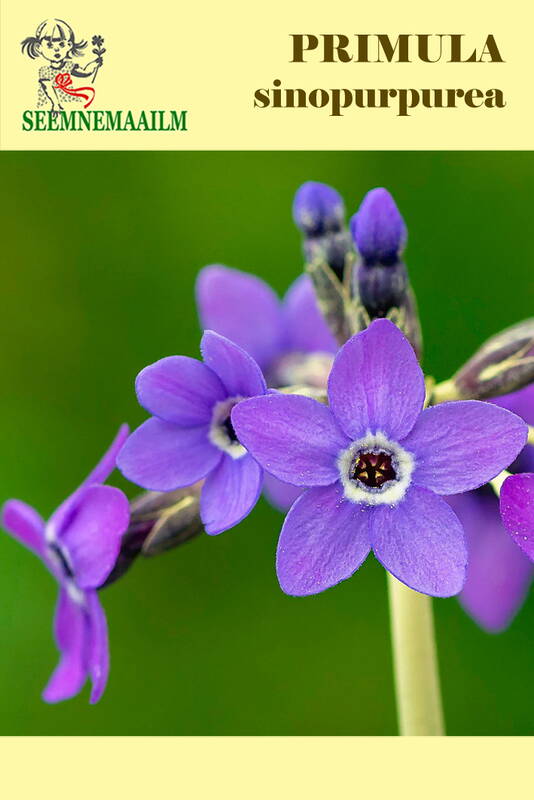
Purple Chionantha Primrose - Primula chionantha ssp. sinopurpurea.
A perennial herbaceous plant of the Primrose family (Primulaceae).
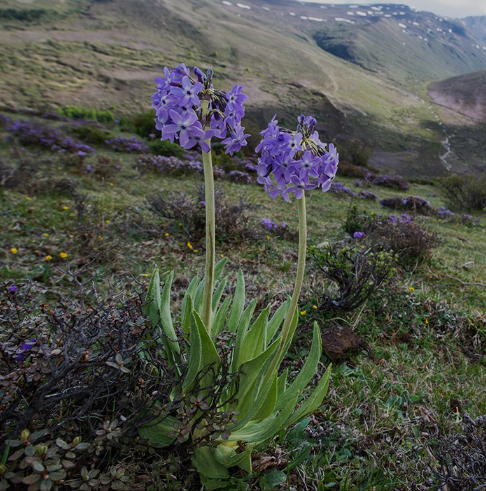
This subspecies is distinguished by its spectacular inflorescences and decorative foliage. It forms a basal rosette of lanceolate leaves 10-20 cm long with a mealy coating, characteristic of the Muscarioides section.
In nature, it grows in the alpine zone at altitudes of 3000-4500 meters above sea level. It is found in wet meadows, rocky slopes and along mountain streams in the Chinese provinces of Yunnan, Sichuan, Gansu and the Tibetan region.
A perennial herbaceous plant of the Primrose family (Primulaceae).
This subspecies is distinguished by its spectacular inflorescences and decorative foliage. It forms a basal rosette of lanceolate leaves 10-20 cm long with a mealy coating, characteristic of the Muscarioides section.
In nature, it grows in the alpine zone at altitudes of 3000-4500 meters above sea level. It is found in wet meadows, rocky slopes and along mountain streams in the Chinese provinces of Yunnan, Sichuan, Gansu and the Tibetan region.
-
Inflorescences: Multi-tiered whorled umbels on flower stalks up to 50 cm high.
-
Flower color: Pale purple-red with a contrasting white center.
-
Flower shape: Bell-shaped, 1.5-2 cm in diameter.
-
Flowering period: May-June (in nature - June-August).
-
Fragrance: Light, pleasant.
Cultivation:
-
Light: Partial shade, protection from direct sun
-
Soil: Moist, well-drained, rich in humus
-
pH: Slightly acidic or neutral reaction
-
Hardiness: USDA 4-8 (withstands down to -34°C)
-
Propagation: By seeds (require stratification), by dividing rosettes.
1.0 g = 5500 seeds. -
Cultivation Features:
-
Requires regular moisture without water stagnation
-
Responds well to organic fertilizers
-
Resistant to diseases with proper cultivation practices
-
Winter mulching is recommended in northern regions
Use in Landscape Design:
-
Alpine gardens and rockeries
-
Shade gardens
-
Border plantings
-
Damp areas near water bodies
Interesting Facts:
-
The species name "chionantha" translates as "snow flower"
-
Used in Chinese medicine as an anti-inflammatory agent
-
Serves as a nectar source for early pollinating insects.
-